Prerequisites
Before connecting HubSpot, ensure you have:HubSpot Super Admin or Admin access
Sales Hub Professional or Enterprise (for full features)
AmpUp admin access for your organization
HubSpot Client ID and Client Secret (see Create a HubSpot App below)
These credentials are required to establish a secure link between HubSpot and AmpUp. Once connected, your data will be encrypted in transit and at rest, and synced periodically to keep AmpUp up to date with your latest CRM data.
Create a HubSpot App
Before connecting HubSpot to AmpUp, you’ll need to create a HubSpot app to obtain your Client ID and Client Secret. There are two methods depending on when your HubSpot developer account was created.- Legacy Apps (Accounts after Sept 2025)
- New Project Apps (Recommended)
- Legacy Apps (Accounts before Sept 2025)
For developer accounts created after September 2025, use this method.
Navigate to Legacy Apps
Log into your HubSpot developer account and go to Development → Legacy apps.

Configure the app
Enter a name for your public app, then go to the Auth tab.Add this redirect URL:Click Create app.
What Data Syncs
From HubSpot to AmpUp
| Object | Fields Synced |
|---|---|
| Companies | Name, domain, industry, size, revenue, description |
| Contacts | Name, email, phone, title, company association |
| Deals | Name, stage, amount, close date, associated contacts |
| Engagements | Calls, emails, meetings, notes |
| Owners | Name, email, team assignment |
From AmpUp to HubSpot
| Data Type | Description |
|---|---|
| Meeting Notes | AI-generated call summaries as engagements |
| Activity Logging | Coaching sessions logged to contact timeline |
| Deal Updates | Next steps and action items |
Connect HubSpot
Enter Provider Credentials
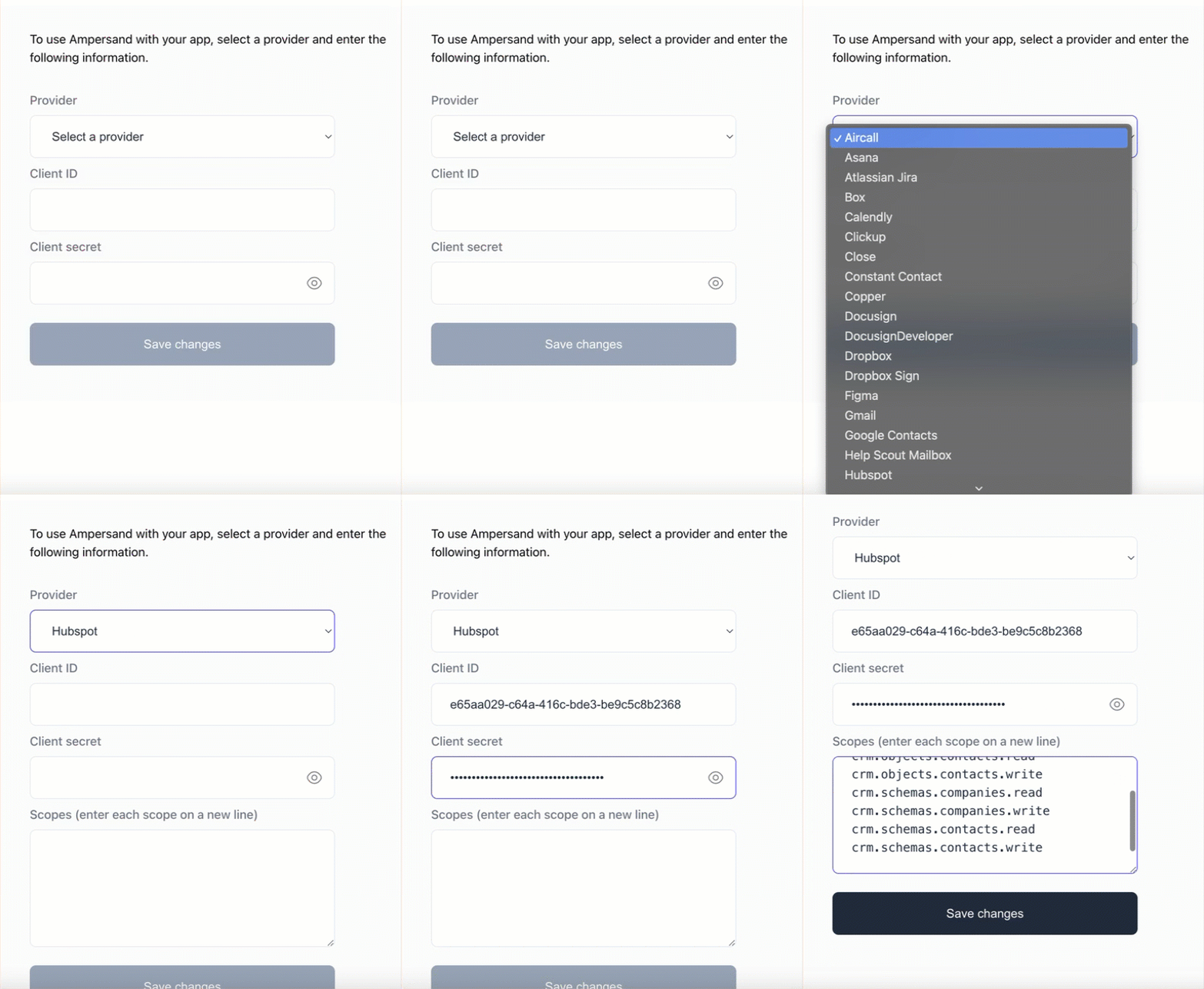
Click the Connect HubSpot button. AmpUp will prompt you to enter the Client ID and Client Secret from the HubSpot app you created above. AmpUp securely stores these credentials and uses them to establish the OAuth connection.

Authorize with HubSpot
After entering your credentials, you’ll be redirected to HubSpot. Sign in with your admin credentials.
Select Your Portal
If you have access to multiple HubSpot portals, select the one you want to connect.
Authorize AmpUp
Review the permissions and click Connect app.AmpUp requests these scopes:
oauth- OAuth authenticationcrm.objects.contacts.read- Read contactscrm.objects.contacts.write- Write contactscrm.objects.companies.read- Read companiescrm.objects.companies.write- Write companiescrm.objects.deals.read- Read dealscrm.objects.deals.write- Write dealscrm.objects.owners.read- Read ownerscrm.objects.meetings.read- Read meetingscrm.objects.notes.read- Read notescrm.objects.tasks.write- Create tasks (action items, follow-ups)crm.schemas.contacts.read- Read contact schemascrm.schemas.companies.read- Read company schemascrm.schemas.deals.read- Read deal schemassales-email-read- Read email engagements
Configuration Options
After connecting, you’ll see the field mapping interface where you can configure which data syncs between HubSpot and AmpUp.
Object Selection
Choose which HubSpot objects to sync:| Object | Purpose | Recommended |
|---|---|---|
| Companies | Account context | ✅ Yes |
| Contacts | Meeting participants | ✅ Yes |
| Deals | Pipeline tracking | ✅ Yes |
| Engagements | Activity history | Optional |
Pipeline Mapping
Map your HubSpot deal pipelines to AmpUp:- Go to Settings → Integrations → HubSpot → Pipelines
- Select which pipelines to track
- Map stages to AmpUp’s sales phases
Custom Properties
Sync custom HubSpot properties:- Go to Settings → Integrations → HubSpot → Custom Fields
- Click Add Property
- Select the HubSpot property and AmpUp destination
Write-back Configuration
Control what AmpUp writes to HubSpot:| Feature | Options | Default |
|---|---|---|
| Call Summaries | Create note, create engagement, disabled | Note |
| Action Items | Create task, add to note, disabled | Task |
| Coaching Scores | Custom property, disabled | Disabled |
Write-back requires additional HubSpot permissions. You’ll be prompted to authorize if needed.
Sync Status & Troubleshooting
Check Sync Status
View status at Settings → Integrations → HubSpot → Status.| Status | Meaning |
|---|---|
| ✅ Connected | Active and syncing |
| 🔄 Syncing | Sync in progress |
| ⚠️ Limited | Some objects not syncing |
| ❌ Error | Connection issue |
Common Issues
Missing contacts or companies
- Verify your HubSpot user has access to the records
- Check if records are in an excluded pipeline or list
- Archived records are not synced by default
Sync delays
Sync delays
- HubSpot rate limits may slow large syncs
- Initial sync can take several hours for large portals
- Real-time sync applies after initial import completes
Permission errors
Permission errors
- Ensure you’re connecting with a Super Admin account
- Some features require Sales Hub Professional or higher
- Check your HubSpot user permissions
Write-back not working
- Verify write permissions were granted during setup
- Check that the connected user can create the object type
- Review HubSpot workflow conflicts
Disconnect HubSpot
To remove the integration:- Go to Settings → Integrations → HubSpot
- Click Disconnect
- Confirm disconnection
- In HubSpot, go to Settings → Integrations → Connected Apps
- Find AmpUp and click Uninstall
FAQ
Can I connect both Salesforce and HubSpot?
We recommend connecting only one CRM to avoid data conflicts. If you use both, choose your primary system of record.
What HubSpot plans are supported?
AmpUp works with all HubSpot plans. Some features like engagement sync require Sales Hub Professional or Enterprise.
How do I sync custom objects?
Custom object sync is available on Enterprise plans. Contact support@ampup.ai to enable.
Can I sync marketing data?
Currently, AmpUp syncs Sales Hub data only. Marketing Hub integration is on our roadmap.